 Ten Thousand to One by Arthur Sze is another one of those poems I come back to over and over, for a lot of reasons I am aware of and most likely others I’m not. I know I return to the poem with the hope of absorbing some of its craft just by the rereading it. I also return for the sensual memory evoked, (now as as someone now living in a tropical island out in the Pacific) of the western mountains, with his depiction of a red-tail hawk drifting over spruce. I also return to what I want to address here, the comfort as well as the science of the universal patterns evoked across seemingly disparate objects as exemplified in this stanza:
Search the summer sky foran Anasazi turkeyconstellation;see algae under an electronmicroscoperesemble a Magellanic Cloud.
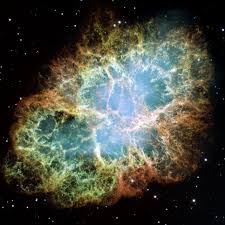
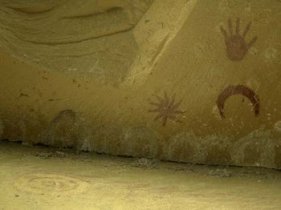
the supernova which created the Crab Nebula in 1054 A.D . They also were known to develop solar observatories and some have speculated that their rock paintings correlated with the constellations of the northern sky. In the Southern Hemisphere, the Magellanic Clouds are other nebula hovering around the Milky Way.
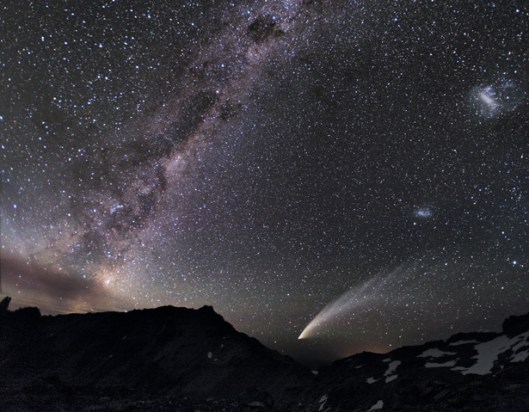
Magellanic Clouds over the Patagonia Andes – National Geographic
Nebula refer to the clouds of gas and dust in outer space, but can also refer to spots on the eyes that cloud our vision.
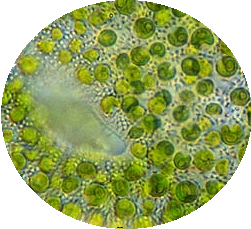
On the level of the microscopic, the repetition of algae, and its spiraling shapes and patterns, seems to mimic the cosmos.


