
Tags
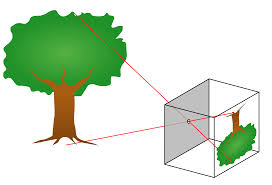 Kay Ryan’s tiny poems are consistent in their short lines and great depth. As if a commentary on the size yet power of her poems, “Pinhole” describes the perceptual phenomenon of the pinhole camera, where the poem invites us to pause to examine a common yet counter-intuitive quality of light.
Pinhole
We saypinhole.A pin holeof light. Wecan’t imaginehow brightmore of itcould be,the waythis muchdefeats night.It almostisn’t fair,whoeverpoked this,with sucha small actto vanquishblackness.
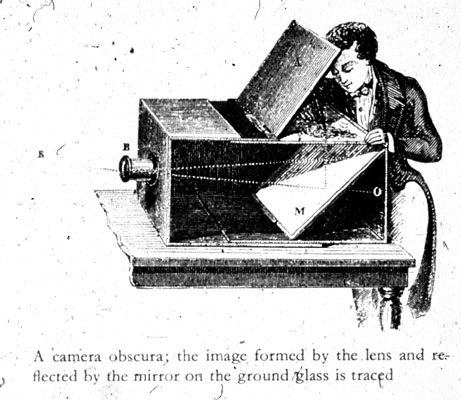 Pinhole cameras consist of a completely dark box (originally “camera obscura” or dark chamber) with a tiny opening. When light is filtered through that thin opening, an upside down image is projected onto the back. This phenomenon of “focusing” was observed by Aristotle, and even before him, as early as the 5th century China, when the Chinese philosopher and Mohist founder Mozi wrote of it., describing a “locked treasure room”.
Mohist were philosophers, religious, scientists, mathematicians and advisers to royalty. They believed that the problem of human ethics was one of partiality of rather than a deficit of 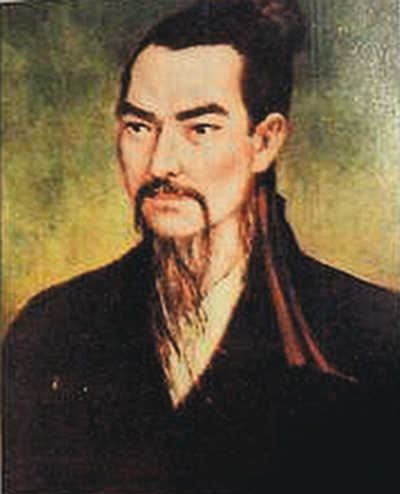 compassion. They believed, in other words, in an impartial universal love and the possibility of peaceful existence between nations. To them, there was no “us” vs “other”.
Ryan writes: “It almost /isn’t fair,/whoever /poked this,/with such/a small act/ to vanquish/ blackness.” It’s almost too simple, like natural laws, love and compassion are a force, not a choice. And it only takes a “pin hole /of light.”, not an army of priests or cathedrals or years of study and penance; to “defeat night”.
 STEM & Leaf